Wednesday, January 5, 2022

$360M funding round values Fractl 'well north of $1 billion,' says co-founder

TechCrunch Newsletter
TechCrunch logo
The Daily Crunch logo

Wednesday, January 05, 2022 • By Alex Wilhelm

Hello and welcome to Daily Crunch for January 5, 2021! Today we have a great mix of news for you. Mega-rounds? Heck yes. Electric trucks from U.S. companies? Yep! Android cozying up to Windows? But of course. And some great essays on lock-up periods, LP transparency and more.

But before we do that, every once in a while I'm going to highlight a TechCruncher behind the scenes who deserves some love. Today it's Henry Pickavet, one of our editors and guiding lights, someone I have known and worked with since my early 20s. He's perfect, apart from the sports teams he follows and the fact that he likes cricket. Follow him on Twitter here if you are so inclined! —Alex

 image

Image Credits: phuttaphat tipsana / Getty Images

The TechCrunch Top 3

  • Making sense of OpenSea at $13B: From rumor to report to confirmation, the OpenSea funding round worth $300 million came to its conclusion quickly. Now the NFT marketplace is worth some $13 billion. So, TechCrunch did the obvious thing and asked if that number makes any darn sense. As it turns out, yes, but how much depends on your level of crypto-bullishness,
  • Android 🤝 Windows: While Apple has been busy defending its walls surrounding the garden that is iOS, Google and Microsoft have been busy paving roads between their Android and Windows operating systems. First, Microsoft announced that some Android apps would eventually run on Windows. And now, news that "Google is working with the likes of Intel, Acer and HP to [connect] your phone to your Windows PC."
  • And here's the *other* company now worth more than $10B: It's Miro! Yep, the online workspace company, as we put it, is now worth some $17.5 billion after raising a $400 million round. The company claims it has 30 million users. Competitor Mural is also doing well, indicating that their market is fairly deep in the remote-work era.

Discover what location can do for your business

Sponsored by HERE Technologies

Stream live panel discussions, partner sessions and product demos directly from CES 2022. Learn how leveraging location technology is helping companies solve some of their biggest challenges and find out what it can do for you.

Learn More

Startups/VC

A few essays to start our startup download today, I think. The first comes from our own Connie Loizos diving into the "year of the disappearing lock-up." In short, Loizos notes that the traditional forced holding period post-IPO is being dismantled in hot public offerings. Not that this is a guarantee of future results — the opposite, it seems — but it's worth tracking the change to what was once a key IPO rule, and, frankly, mark of confidence.

Speaking of IPOs, the insurtech IPO wave of 2020 and 2021 is looking pretty darn threadbare today. TechCrunch took a look back at the struggles of names we've written about for ages, the Roots and Metromiles of the world, but also Oscar Health. It hasn't done well either, it turns out.

Anna Heim wrote a fascinating piece on LP transparency. The idea that founders should care about where their investors get their money is not new. But what is fresh is the leverage that founders have over investors — the founder-investor power dynamic has flipped, leading more VCs to think that it might be time to open up their own books a little.

Now, more news!

  • Bankaya goes offline for customer acquisition: The hunt for new users is a global startup challenge, and one that leads to some interesting solutions. Mexican fintech Bankaya is taking an IRL tack to the challenge, noting that the major ad channels for its products are rife with competitors chasing the same eyeballs.
  • Tax advantaged crypto investments? Startup Alto just raised $40 million for what TechCrunch reports is a "self-directed IRA platform [that] provides a simpler, more affordable option for individuals to invest their retirement savings into alternatives," at least in theory. I dig it.
  • Fractal goes unicorn with new $360M round: It turns out that this company is 21 years old, so it's not a startup, per se. But it is a private company that just raised nine figures, so it hit our radar. The company's analytics product does AI and analytics work for major companies.
  • SoftBank eyes new Indian investment: Pune-based ElasticRun is in talks to close a round worth $200 million or so from SoftBank Vision 2 and Goldman Sachs, Manish Singh reports for TechCrunch. The startup helps neighborhood stores "secure inventory from top brands and working capital," we report.
  • Meet a very cute dishwasher named Bob: From the CES trenches, meet Bob. It's a small dishwasher unit for apartment countertops that is efficient, and, dare we say it, adorable.
  • To close out our startup items, Xage has raised $30 million to help project critical infrastructure. Which is good, given that much of the power lines and water facilities that you depend on are fairly out of date and begging for nation-state shenanigans. (The startup's name is pronounced zage, Ron Miller.)

4 trends that will define e-commerce in 2022

Data privacy has been top of mind for online sellers and for good reason: Regulators are taking an interest, and iOS 14.5 lets users turn off data tracking, with negative consequences for “Facebook’s ad targeting.”

Bearing those factors and others in mind, Ben Parr, president and co-founder of e-commerce marketing platform Octane.ai, shared his predictions for 2022 with TechCrunch+:

  • Personalization and zero-party data become critical.
  • E-commerce embraces web3 and NFTs, but what will that look like?
  • Live shopping goes mainstream.
  • Slow but gradual improvement to the supply chain.

(TechCrunch+ is our membership program, which helps founders and startup teams get ahead. You can sign up here.)

Read More

4 trends that will define e-commerce in 2022 image

Image Credits: MirageC / Getty Images

Big Tech Inc.

We have a number of automotive-themed news items below, but let's start on your phone with Instagram. The social subsidiary of the larger Meta empire is bringing back its chronological feed. Praise be. Forcing users to endure algorithmic timelines is lame, in my view, and something that moves power away from users toward the adtech gods that run social platforms. I might even re-sign up for Instagram now that this is fixed.

  • Mortgage data analytics company settles with FTC over data breach: Back in 2019, TechCrunch reported that "OpticsML, a New York-based vendor working for Ascension, left a database of highly sensitive financial data exposed to the internet without a password." Now two years after that reporting, results!
  • GM promises a plethora of electric vehicles: If you want an electric Equinox or Blazer, GM is going to hook you up in 2023. It claims. And the company is building an electric Silverado pickup, coming a bit late to the table given how many announcements Ford has already made. But the die really is cast here regarding the future of rolling vehicles, no matter who is currently leading. They are going electric. And fast.
  • And GM wants to get self-driving cars on the road: By the middle of the decade, the company said. I am a wee bit skeptical of any provided timeline for autonomous vehicles, but at some point they will work — right? — and that day will be good. Let's hope these latest projections bear out in time.

TechCrunch Experts

TechCrunch wants you to recommend growth marketers who have expertise in SEO, social, content writing and more! If you're a growth marketer, pass this survey along to your clients; we'd like to hear about why they loved working with you.

If you’re curious about how these surveys are shaping our coverage, check out this article on TechCrunch+ from Ben Parr: "4 trends that will define e-commerce in 2022."

Read More

TechCrunch Experts image

Image Credits: SEAN GLADWELL / Getty Images

Read more stories on TechCrunch.com

Newest Jobs from Crunchboard

See more jobs on CrunchBoard

Post your tech jobs and reach millions of TechCrunch readers for only $200 per month.

Facebook Twitter Youtube Instagram Flipboard

View this email online in your browser

Privacy Policy | Terms of Service | Unsubscribe

© 2022 Verizon Media. All rights reserved. 110 5th St, San Francisco, CA 94103

Tuesday, January 4, 2022

Israel-based cybersecurity startup Siemplify sells to Google for $500M

TechCrunch Newsletter
TechCrunch logo
The Daily Crunch logo

Tuesday, January 04, 2022 • By Alex Wilhelm

Hello and welcome to Daily Crunch for January 4, 2022! Yesterday we noted that startup news was kicking off the year a little light, but that that would change quickly. And change it has. In the following we have IPO news, robot news, canned-water startup news, acquisitions and more. Let's go! —Alex

 image

Image Credits: Beata Zawrzel/NurPhoto / Getty Images

The TechCrunch Top 3

  • Justworks' valuation could top $2B in IPO: The first of the anticipated 2022 technology IPOs dropped a price range this morning, meaning that the public offering season is officially underway. SMB HR-focused Justworks' valuation could scoot past the $2 billion mark, by our reckoning, when it starts to trade (we presume) later this month. For its investors, the price appears to be a win.
  • Joe Lonsdale's bad tweets get him in trouble: After diving into the issue of disparate investment totals for different groups of people, 8VC's Joe Lonsdale has been trying to walk back his comments on Twitter. It's not really working, as he appears to have said what he thinks. And folks in venture are not thrilled, Natasha reports.
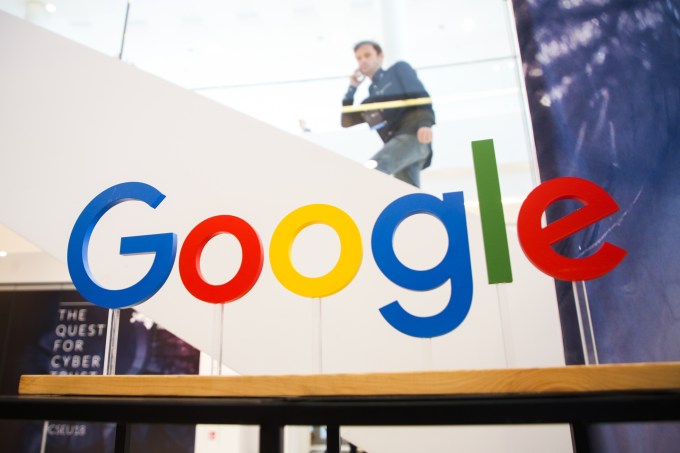
  • Google confirms $500M buy of Israeli cybersecurity startup: Reports that U.S. search giant Google was buying Israeli startup Siemplify have been confirmed, TechCrunch writes. Sources close to the deal confirmed the price, even if Google is staying mum on how much it dished out for the company.

Startups/VC

Before we dive into startup news about individual companies, a few notes. First, while tech stocks have taken a hammering in recent weeks, it appears that the private markets are full-steam ahead. There's risk there. Looking abroad, we also have notes up on fintech in Africa and how dominant the single startup category is proving to be. And Refinery Ventures' new fund is all about getting startups to their Series A, Christine Hall reports.

Now, the rest of it:

  • Why is canned water so expensive to sell? That's my question regarding the news that Liquid Death just raised a $75 million round. Don't get me wrong, water is fine, and death-themed water is right up my heavy metal alley. But the sheer amount of capital that is flowing into tech-light businesses is confusing. That said, I am here to support any brand that leans into metal music as far as Liquid Death has, per its merch page.
  • Robot bar carts are here to help: Labrador Systems' multiyear project to build a robot for moving things about a home is coming to fruition, TechCrunch reports. We clapped eyes on the device back in 2020, meaning we've been waiting for it to come out for some time. Per our reporting, the company's Retriever robot offers "assistance for elderly users and people with limited mobility." That's rad.
  • Skydio launches refined drone model: U.S. drone startup Skydio has updated its Skydio 2 drone to the Skydio 2+, which brings with it longer flight range, more battery life and new software. Skydio captured attention with its drones that follow and film their owners.
  • Great, now my meditation app wants me to actually do things: Calm, best known as one of the major meditation mobile apps, is expanding into other areas of self-care. And now, we don't mean extra wine on Monday mornings. Instead, Calm has put together what it calls "Daily Move" videos that will help its users move. Bold from a company that made its bread to date on helping people sit still. But because you have to do both to be sane, I have learned, Calm could be onto something here. Let's see how the new content performs in-market.
  • Recorded Future spends $65M on SecurityTrails: Here's a neat little startup deal. Recorded Future, a threat intelligence company, has purchased SecurityTrails, a company that we report "collects and maintains vast amounts of current and historical internet records, such as domain name records, registration data and DNS information, giving organizations visibility into what their threat attack surface is."
  • Atmosphere raises $100M: OK, this one is cool. Atmosphere is a startup that creates video content — at times sans sound — for "broadcast in public places like bars, restaurants and doctors' offices." Think of the visual version of the music you hear in elevators. Get it? The company's new round was 80% equity, 20% debt.

And from the what did you expect file, Starlink is shedding Indian staff after it was told to stop operating in the country without a license.

AWS will buy a SaaS company, and other 2022 enterprise predictions

Yesterday, TechCrunch reporter Ron Miller shared his predictions for enterprise companies this year.

As he noted, making enterprise forecasts is tricky: In 2021, who expected Salesforce to snap up Slack for almost $28 billion, or that Jeff Bezos would hand over the reins of Amazon to Andy Jassy?

“I sure didn't see that coming, and I'm betting most people didn't,” wrote Ron. “The tech world moves so quickly, it's often hard to keep up.”

With “the usual caveats,” his prognostications encompass ongoing supply chain issues, the impacts of increased regulatory oversight in Europe and the U.S., and his thoughts on a M&A market where table stakes are measured in the tens of billions.

His boldest, spiciest take?

Salesforce … was quiet in 2021, busy closing the Slack deal. It won't be too unrealistic to expect something in 2022. Maybe something SaaS-y like Zoom, Box or Dropbox. Maybe Benioff finally gets Twitter, a company he desperately wanted in 2016, as Casey Newton suggested in The Platformer this week.

(TechCrunch+ is our membership program, which helps founders and startup teams get ahead. You can sign up here.)

Read More

AWS will buy a SaaS company, and other 2022 enterprise predictions image

Image Credits: Tyler E Nixon / Getty Images

Big Tech Inc.

There are two topics to hit on today from Big Tech. The first is from Amazon, and the rest is a huge pile of reporting on what's going on at CES this year. First, Kindle:

  • Kindle's future in China is fading: The Amazon e-reader has been in the Chinese market for nine years, but supply of its devices is drying up in the country. Given the broader push by the Chinese government to control media of all sorts, the move is not a surprise. After all, even a smaller Kindle library is still a lot of books. And, well, open inquiry is not really ascendant in the Chinese market these days thanks to the Chinese Communist Party.

And from CES:

Read More

Big Tech Inc. image

TechCrunch Experts

TechCrunch wants you to recommend growth marketers who have expertise in SEO, social, content writing and more! If you're a growth marketer, pass this survey along to your clients; we'd like to hear about why they loved working with you.

If you’re curious about how these surveys are shaping our coverage, check out this article on TechCrunch+ from Miranda Halpern: "10 growth marketing experts share their 2022 predictions and New Year's resolutions."

Read More

TechCrunch Experts image

Image Credits: Nora Carol Photography / Getty Images

Read more stories on TechCrunch.com

Newest Jobs from Crunchboard

See more jobs on CrunchBoard

Post your tech jobs and reach millions of TechCrunch readers for only $200 per month.

Facebook Twitter Youtube Instagram Flipboard

View this email online in your browser

Privacy Policy | Terms of Service | Unsubscribe

© 2022 Verizon Media. All rights reserved. 110 5th St, San Francisco, CA 94103

Monday, January 3, 2022

No-code app development platform Abstra raises $2.3M

TechCrunch Newsletter
TechCrunch logo
The Daily Crunch logo

Monday, January 03, 2022 • By Alex Wilhelm

Hello and welcome back to Daily Crunch for January 3, 2022! It's a new year, but that doesn't mean we're going to reinvent the wheel. This newsletter is going to stick to its tried-and-true format, so expect few surprises and lots of news.

Before we start, a big thanks to Greg for taking over while I was off. Now, to work! —Alex

 image

Image Credits: Founder Bruno Vieira Costa / Abstra

The TechCrunch Top 3

  • Apple's value touches the $3T mark: It's easy to forget just how big the biggest tech companies are. The numbers simply scale past our ability to understand them. U.S. tech behemoth Apple made that point in spades today by briefly becoming worth three trillion USD. It's a little hard to sum up just how much money that is, but it's enough money that if you distributed the sum to all current Americans it would work out to around $9,000.
  • Abstra raises $2.3M for no-code apps: The boom in no- and low-code services in recent years is partly thanks to demand for traditional developers outstripping supply, and technology itself advancing to allow the method of development to, well, work. Brazil's Abstra's latest round further indicates that the no- and low-code phenomenon is a global affair.
  • Twitter completes MoPub sale: The October-announced sale of Twitter's MoPub service to AppLovin, a deal worth $1.05 billion, is now complete. MoPub is a mobile advertising platform, but Twitter is not done with ads. The company intends to keep building its in-house ad tech now that the deal is done, TechCrunch reports.

Startups/VC

The new year is already paying drama dividends, with the latest coming from an investor and the former CEO of Twitter. You see, Chris Dixon doesn't agree with Jack Dorsey's criticisms of non-Bitcoin crypto companies. You can imagine the fun that we are having with this.

  • Smarter Health raises $3.8M for better healthcare data sharing: If you have ever had to port your own data for your healthcare providers, you are aware of how much fun it is. None. That's how much. Happily Smarter Health is working on the issue in Singapore, working to allow for a "smoother exchange of data between different parties in the healthcare system, improving patient care and reducing administrative costs."
  • What's ahead for wheels? The TechCrunch transit desk has a great look back at 2021 and a forecast for 2022. If you care about e-scooters, autonomous driving or anything related, we have you covered.
  • AIMMO raises $12M Series A for data labeling: AI is neat but needs lots of data to function. And to get that data, sometimes you have to do lots of tagging. Startups are taking this problem on, including Scale AI. AIMMO, a South Korean startup, has a neat take on the work varietal and, now, a full bank account.

And because you deserve a treat for making it through the first working day of the year: The "Cheugiest tech moments of 2021" from three of TechCrunch's best.

If you need even more diversion, TechCrunch also has stories today on zen balls and driving fish.

When fundraising, New Zealand startup founders should play the "Kiwi card"

In the final article in a series about New Zealand, Rebecca Bellan spoke to four stakeholders to learn more about how foreign investment and a fund of funds program are juicing up the nation’s burgeoning startup ecosystem:

  • Peter Beck, CEO/CTO Rocket Lab
  • Cecilia Robinson, founder and co-CEO, Tend Health
  • Phoebe Harrop, principal, Blackbird Ventures
  • Robbie Paul, CEO, Icehouse Ventures

"While starting on a rock at the bottom of the world comes with challenges, there are plenty of advantages, too,” said Paul, who advises native founders to “play the Kiwi card.”

Almost one of every five New Zealanders lives abroad, and that diaspora has helped the nation build a great deal of international goodwill. “It's an easy conversation starter and chances are most interesting people offshore have some sort of affinity or connection to New Zealand,” Paul said.

(TechCrunch+ is our membership program, which helps founders and startup teams get ahead. You can sign up here.)

Read More

When fundraising, New Zealand startup founders should play the "Kiwi card" image

Image Credits: Jami Tarris / Getty Images

Big Tech Inc.

  • Why is Delivery Hero buying more of Glovo? The latter company previously said that it wanted to stay indie and go public. And yet it was recently announced that Delivery Hero would acquire a majority stake in the business. TechCrunch digs into what might have happened.
  • BlackBerry's network is done: You really, really have to get rid of your BlackBerry. Why? Because the company "will end access to legacy services" tomorrow, which means no "key features like data, phone calls, SMS and 911 access." It is time. At long last. All seven of you who still use a BlackBerry.

TechCrunch Experts

TechCrunch wants you to recommend software consultants who have expertise in UI/UX, website development, mobile development and more! If you're a software consultant, pass this survey along to your clients; we'd like to hear about why they loved working with you.

TechCrunch Experts image

Image Credits: SEAN GLADWELL / Getty Images

Read more stories on TechCrunch.com

Newest Jobs from Crunchboard

See more jobs on CrunchBoard

Post your tech jobs and reach millions of TechCrunch readers for only $200 per month.

Facebook Twitter Youtube Instagram Flipboard

View this email online in your browser

Privacy Policy | Terms of Service | Unsubscribe

© 2022 Verizon Media. All rights reserved. 110 5th St, San Francisco, CA 94103