Wednesday, January 26, 2022

No-code SaaS platform CaptivateIQ spears $1.25B valuation with $100M Series C

TechCrunch Newsletter
TechCrunch logo
The Daily Crunch logo

Wednesday, January 26, 2022 • By Alex Wilhelm

Hello and welcome to Daily Crunch for January 26, 2022! Today we have surveillance robots, a Harry Potter reference, layoffs and startup news galore. Heck, we even have some Reddit news in the mix. It's a good day to be a tech fan, worker and general consumer. Enjoy! – Alex

 image

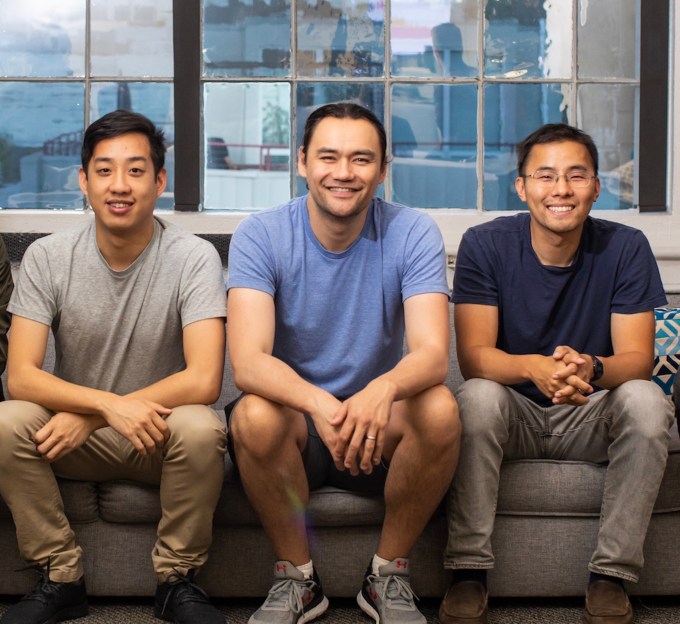
Image Credits: Left to right: CaptivateIQ co-founders Hubert Wong, Mark Schopmeyer and Conway Teng / CaptivateIQ

The TechCrunch Top 3

  • Taking a robot surveillance company public in 2022: Is not an easy feat, frankly. Given a rising general consciousness about privacy, Knightscope is going public at an interesting time. The IPO window has also been tricky of late, with some companies delaying their offerings. We have our eyes on this, if for no other reason than the fact that robots are inherently cool.
  • Firebolt's valuation soars higher: Announcing a $100 million round at a $1.4 billion valuation is big news for any company. For a startup that shares a name with a Harry Potter broomstick, it's somewhat epic (we tried to work a golden snitch joke into the headline here and failed). Per our own Ingrid Lunden, Firebolt is "taking on Google's BigQuery, Snowflake and others" with a cloud data warehouse product that it claims is both less expensive and faster.
  • Layoffs at Glossier: Eighty corporate staffers at Glossier are out, we learned today. TechCrunch notes that the layoffs are worth about a third of the company's corporate workforce. The gist, per an internal email, is that the company is going to leverage third-party tech instead of, we presume, building its own.

Dear CFOs of America

Sponsored by Ramp

We're sorry that shopping for a corporate card has become a game of trying to find the best perks. You deserve better. Introducing Ramp: the ONLY finance automation solution designed to save you time & money. Benefits of Ramp: Never fill out an expense report again. Close your books in hours, not days. Know how every dollar is spent. Get 1.5% cash-back.

Sign Up Now

Startups/VC

Today's startup news is a really neat mix of things, so we're proceeding in paragraphs instead of bullet points so that we can stretch our legs. To work!

With the stock market in turmoil, and valuations falling for tech companies around the world, three TechCrunchers put their heads together to answer a question: How should founders prepare for a decline in startup valuations and investor interest? We tend to put out three-views pieces around singular news events, but this time we had some fun with a trend.

Moving along, news broke today that UBS is buying robo-advisor Wealthfront for $1.4 billion. Those of us who were paying attention to fintech back in the day will recall when Wealthfront and Betterment battled it out for new customers and assets, building new tech to attract capital and users while also working to crush one another. The story is now partially closed, so we took a look at the deal from the perspective of revenue, assets under management and customers.

In good news for European startups generally – not like they have been suffering, mind – Spain's startup law is "months away," we report. The idea here is that Spain wants to attract more tech talent and startups. This makes good sense as tech companies can grow into large firms replete with high-payings jobs, given the space and time to do so. What's in the law? According to our own Natasha Lomas, the bill covers "key areas like tax breaks for investors, talent incentives like stock options and a new digital nomad visa to attract international tech workers."

Back on this continent, TechCrunch wrote today about Boom, the supersonic jet startup that wants to bring back fast traveling for consumers. Since the Concord kicked the bucket, we've all been flying at speeds that are pretty piddling compared to how fast our species has managed in the past. And we've all been kinda like, all right, I guess. I didn't think that the comnpany was going to survive, but it has, and Boom is planning on building its speedy jets in North Carolina. Go Tarheels, I suppose!

Today from the oh god just go public file, Reddit is testing a method of allowing its users to upload NFTs as their profile pictures. Twitter recently did this. It's a bit like uploading a picture to be your profile picture, but more complicated. Regardless of what regulars think of the NFT boom, it's clear that tech-heads are all-in.

Speaking of tech workers, how most companies hire their engineers is a bit backwards. Most developers don't really spend their time doing solo logic work on whiteboards while being watched by recruiters. So why is that how they are vetted? Byteboard's new method of testing computer engineering talent just landed $5 million, so perhaps change is on the way.

If you live in Europe, you might want to invest in Asian stocks. Or if you live in Latin America, you might want to invest in companies public in the United States. This is not always as simple as you might think, so Vest's work to help folks in the larger Americas investing in U.S. companies caught our eye. Founders Fund is backing the company's work.

One interesting part of today's startup landscape is the world of sales. SalesOps software is no small niche, with Gong proving that the sales use case can lead to serious dollars. CaptivateIQ is another player in the space, albeit with a different focus. Per our own Mary Ann Azevedo, CaptivateIQ "has developed a no-code SaaS platform to help companies design customized sales commission plans," just raised $100 million and tripled its revenue last year.

And from the miscellaneous bucket, the Equity team had Bessemer growth-stage investor Mary D’Onofrio on to chat changing valuations, exit multiples and what's ahead for startups. And I made a small argument that more drama in the tech space would do us good.

A CISO's playbook for responding to zero-day exploits

The Log4Shell exploit that gave bad actors the ability to execute malicious code on infiltrated servers made global headlines and ruined many cybersecurity professionals' holidays.

Despite a series of high-profile attacks, many companies still lack a response plan, writes Jonathan Trull, SVP of customer solutions, architecture and engineering at Qualys.

Drawing on his experience as a CISO, Trull outlines three steps companies can take to develop a playbook:

  • Establish a standard operating procedure
  • Inventory, inventory, inventory
  • Information gathering, sharing and analysis

(TechCrunch+ is our membership program, which helps founders and startup teams get ahead. You can sign up here.)

Read More

A CISO's playbook for responding to zero-day exploits image

Image Credits: Kalawin / Getty Images

Big Tech Inc.

  • Apple closes security holes: There are updates out for iOS 15.3 of macOS Monterey 12.2, so if you use those operating systems, it's time to patch your code. The iOS update alone fixes 10 security bugs.
  • Activision Blizzard won't voluntarily recognize union, because of course: Nothing says we're an employee-focused company more than looking at the collective will of your staff and saying no. Or at least that appears to be what corporations think. Not that you or I had high hopes for a company immiserated by its own incompetence, but, hey, hope springs and all that.
  • Snap upgrades its AR shopping feature set: Per our own Sarah Perez, the social network Snapchat is "upgrading its AR shopping experience," including changes to "Shopping Lenses" and analytics for third parties.
  • More money for EVs: Rita Liao agrees with you and me that there are quite a lot of electric vehicle companies to track. Thankfully, she's on the beat so that we can stay informed. This time it's "Jidu, an electric carmaking company founded by Baidu and its Chinese auto partner Geely," which just raised $400 million.

TechCrunch Experts

TechCrunch wants you to recommend growth marketers who have expertise in SEO, social, content writing and more! If you're a growth marketer, pass this survey along to your clients; we'd like to hear about why they loved working with you.

TechCrunch Experts image

Image Credits: SEAN GLADWELL / Getty Images

Read more stories on TechCrunch.com

Newest Jobs from Crunchboard

See more jobs on CrunchBoard

Post your tech jobs and reach millions of TechCrunch readers for only $200 per month.

Facebook Twitter Youtube Instagram Flipboard

View this email online in your browser

Privacy Policy | Terms of Service | Unsubscribe

© 2022 Verizon Media. All rights reserved. 110 5th St, San Francisco, CA 94103

Tuesday, January 25, 2022

Google dumps FloC plan, proposes new Topics API for ad targeting

TechCrunch Newsletter
TechCrunch logo
The Daily Crunch logo

Tuesday, January 25, 2022 • By Alex Wilhelm

Hello and welcome to Daily Crunch for January 25, 2022! Today our cup overflows with news. There's simply too much going on to cover in a single newsletter, so I've tried to fit as much as possible below. Some sections are condensed, but you'll see why. No more delay, the news! – Alex

The TechCrunch Top 4

  • Google proposes Topics to replace cookies: The American search giant's idea of building Federated Learning of Cohorts, or FLoCs is over. The company is instead proposing Topics. What are they? Per our own Frederic Lardinois, the idea behind Topics is that "your browser will learn about your interests as you move around the web," storing around three weeks of data, focused on 300 different thematic groupings. This is a big deal, if it comes to be.
  • Nvidia could walk away from ARM deal: With regulatory progress slow, the huge chip deal between Nvidia and ARM could be off. Will ARM instead go public? What does SoftBank think of the changing regulatory winds? We'll find out.
  • VCs fell in love with Europe last year: While the global venture capital market was hectic last year, few regions can boast similar gains as Europe managed during 2021. TechCrunch dug into the data, looking at individual countries that stood out from the bloc, and asked what's coming next.
  • YouTube considers NFTs: According to YouTube CEO Susan Wojcicki, the online video giant could be looking at blockchain technologies as a way for its creators to make money. Precisely how NFTs will work for the platform is not clear, but what is plain at this juncture is that nearly every major digital brand is going to at least try NFTs out in case they work for their users.
The TechCrunch Top 4 image

Image Credits: Images by Christina Kilgour / Getty Images

Catch TechCrunch's Equity Podcast Live on February 10

Sponsored by TechCrunch

Join and participate in a free live recording of the TC Equity podcast where Alex Wilhelm, Mary Ann Azevedo, & Natasha Mascarenhas break down this week's hottest headlines. You'll get a sneak peek in advance of the podcast dropping to the public! Register for the February 10th recording at 9am PT.

Register Here

Startups/VC

TechCrunch Disrupt Startup Battlefield startup Cellino Bio raises $80M: This is the leading story from startup-land today, I reckon. Just a few months after winning our own startup pitch competition – and $50,000 of our money, sans equity cost – Cellino has raised a massive Series A that should provide the startup with plenty of runway. For more on what the startup does, head here.

And now, highlights from the day's startup news:

  • Substack hits play: No, the popular publishing platform is not pivoting to video, but it is working to allow its creators use video as part of their subscription offerings. Users will be able to put videos behind the paywall, of course, perhaps helping them drive more revenue – and thus more income for Substack itself.
  • $32M for carbon honesty: Startup Sylvera is back in the news, raising a huge Series A after closing a $5.8 million Seed round last year. What does the company do? It "uses machine learning technology to analyze a variety of visual data like satellite imagery and lidar with the goal of boosting accountability and credibility around carbon offsetting projects," TechCrunch reports.
  • The future of autonomy is grass: With the iRobot self-driving lawn mower not yet in the market, there is perhaps space for another company to build such a device. Electric Sheep Robotics wants to be that company, and it just raised $21.5 million for its work. Given the hours I spent mowing the lawn growing up, I resent the fact that future kids won't have to endure similar punishment.
  • Billion-dollar green drink: Athletic Greens has raised $115 million in a round that values its business at $1.2 billion, TechCrunch writes. The company sells AG1, a "powdered beverage designed to provide daily nutrition," per our reporting. The company has scaled to a nine-figure run rate, but we're always curious when non-software companies are valued along similar lines. Perhaps the margins are high and the revenue recurring?
  • There's still room for more salestech: Devtools, designer support, and marketing automation are all big niches, and the salespeople of the world desire their own tooling, too. And VCs are stepping up to finance it. Enter Scratchpad, which just raised a $33 million Series B. The company's product helps sales folks get data into their CRM, and to their larger org as well.
  • Cybersecurity co raises rapid-fires Series C: After raising last August, Hunters has taken down another funding round. My knowledge of cybersecurity is minute, so I simply have to trust Frederic when he writes that the startup wants to help "enterprises replace traditional Security and Information Event Management (SIEM) solutions with its own tools." If that makes sense to you, excellent. All I know is that Crowdstrike sponsored the F1 safety car last season.
  • Bokksu raises at $100M valuation for Asian grocery delivery: There are a few companies working on providing Asian foodstuffs to various markets. HungryPanda, for one. Bokksu is another, focusing its efforts on grocery in particular. The company started life as a Japanese snack subscription service way back in 2016, and has since expanded greatly. Now with $22 million in new capital, it can grow even faster.
  • Tunisian startup raises $100M: We don't hear about startups from Tunis, so the InstaDeep round caught our eye. The company "creates decision-making systems for solving real-world problems," TechCrunch writes, and just raised from Google, among others.
  • A great host of other things happened, so give the front page a scroll if you want to learn even more about what's happening in startup-land.

To close out our early-stage coverage, Greg Kumparak takes a look at the 29th batch of startups from the Alchemist Accelerator, which has an enterprise focus.

Crypto pioneer David Chaum says web3 is 'computing with a conscience'

In 1982, computer scientist David Chaum wrote a dissertation that described a blockchain protocol, along with the code for implementing it.

Since then, his cryptologic research has led to developments like digital cash and anonymous communication networks. Today, he launched xxmessenger, which the company describes as the first "quantum-resistant" messaging app.

When we asked him what has changed in the past few years, Chaum said, "Seems to me that Bitcoin and the like have created something that could no longer be ignored. Now the question is: How can it be brought to the general public in a way that they can readily adopt this next generation of information technology?"

Read More

Crypto pioneer David Chaum says web3 is 'computing with a conscience' image

Image Credits: PATRICIA DE MELO MOREIRA / Getty Images

Big Tech Inc.

  • The pride of Rhode Island says chip shortage end not in sight: The United States Department of Commerce's boss Gina Raimondo – former governor of the Ocean State before being tapped for her new role – says that "we aren't even close to being out of the woods as it relates to the supply problems with semiconductors." So that's bad news, but at least we know where we stand.
  • IBM's growth wins investor plaudits: Yesterday IBM reported its best growth results in some time. Its stock went up. Then the company said that it wasn't going to provide per-share profit guidelines. And its stock went down. Today, however, investors weighed the balance and pushed the company's value up by more than 5%.
  • From BigTech -> Blockchain: There is something of a talent shuffle going on in tech as folks leave major concerns for younger, smaller, crypto-related efforts. The head of YouTube Gaming appears to be the latest defector.
  • Old man shouts at Joe: There's more drama in the Spotify world, with musician Neil Young trying to use his influence to get the music streaming service to stem vaccine misinformation via its podcast host Joe Rogan. I don't know how this shakes out, but it's an interesting place for the European company to find itself.
  • And finally today, GM has big plans for its electric vehicle production.

TechCrunch Experts

TechCrunch wants to know which software consultants you've worked with for anything from UI/UX to cloud architecture. Let us know here.

ICYMI, check out this interview Miranda Halpern did with Georgina Lupu-Florian last week: "How should nontechnical founders collaborate with software developers?"

TechCrunch Experts image

Image Credits: SEAN GLADWELL / Getty Images

Read more stories on TechCrunch.com

Newest Jobs from Crunchboard

See more jobs on CrunchBoard

Post your tech jobs and reach millions of TechCrunch readers for only $200 per month.

Facebook Twitter Youtube Instagram Flipboard

View this email online in your browser

Privacy Policy | Terms of Service | Unsubscribe

© 2022 Verizon Media. All rights reserved. 110 5th St, San Francisco, CA 94103

Monday, January 24, 2022

Peloton CEO in hot seat, activist investor says 'the ride for Mr. Foley is over'

TechCrunch Newsletter
TechCrunch logo
The Daily Crunch logo

Monday, January 24, 2022 • By Alex Wilhelm


Hello and welcome to Daily Crunch for January 24, 2022! Today is a kinda tough day for, well, everyone. The value of assets new and old dropped around the world, and everyone is staring around at the mess, wondering what comes next.

Well, the good news is that we can answer that question for you. What's next? A gajillion startup funding rounds, of course! – Alex

 image

Image Credits: Ezra Shaw / Getty Images

The TechCrunch Top 3

  • Activist investor calls for CEO switch at Pelton: After riding the pandemic up, at-home cycling company Peloton is stuck in neutral, spinning its wheels as its share price drops. The value of the former startup has fallen so far that activist investors are calling for a CEO swap, a sale of the company, or both.
  • Meta joins the supercomputer game: It is a truth universally acknowledged: A [tech megacorp] in possession of a good fortune must be in want of a [supercomputer]. And thus did we learn today that The Artist Formerly Known As Facebook is gunning for a top-10 spot on the global supercomputer charts. Perhaps now the company will have the computer power required to no longer report incorrect metrics to partners and customers.
  • Will this selloff shake investors? The day's selloff hit everything from stocks to crypto prices. But while readily traded assets are taking damage, less liquid startup shares appear to be in high demand. Precisely how long the public-market damage will take to leak back into earlier startup rounds is not clear, but that the climate has changed, well, is.

Ever wish life changes came with an instruction manual?

Sponsored by Dialpad

We have good news for you! As the world continues transitioning to hybrid work, we have created a nifty Hybrid Work Playbook to help your team understand how to build and sustain a hybrid work model that's equipped for success with key communication tools.

Download Here

Startups/VC

  • Mark Cuban wants to lower consumer pharma stress: To avoid getting fired, I will retain my views on the modern pharmaceutical industry. But in good news, Mark Cuban is backing a startup that wants to change the pharmacy game for consumers by selling drugs at cost plus 15%. Which is a modest profit margin for drugs, frankly. Let's see if it works.
  • Today in good startup names: Pestle is building an app for recipes, shopping lists and other cooking needs. Anyone who has been in charge of making food on a regular basis for others can attest to the issues that stem from — to pick a few at random — stale meal rotations, boring ingredient mixes and the sheer ennui of uninspired food creation. Pestle – which has a great name, and when it goes brick and mortar, can call itself Mortar and Pestle – could change the situation for the cooks in our lives.
  • Deliverect raises $150M: Now worth some $1.4 billion thanks to its latest funding round, Deliverect is a bet that building "a platform to integrate the many moving parts that go into ordering and delivery for the average restaurant" is going to be a post-pandemic hit.
  • Anyplace is making room for you to work wherever: If you don't have pets, kids or a partner that has a geo-located job, you can scoot about the world now and work where you will. This is very good. Less good are the office setups you might encounter on the road. Anyplace is now building "furnished apartments that include a 'fully equipped' home office" for rent, which is pretty neat.
  • Consolidation in the instant food space: While I am an impatient person, I have never really minded the time it takes for food to reach my house via Uber Eats or similar. But for many folks, it's too long a wait. So, instant-delivery startups have been busy bringing foodstuffs to homes, and raising lots of money at the same time. Now we are seeing some consolidation, including Gorillas buying Frichti, creating a new German-French fusion that sounds like a tasty morsel.

To close out our startup news today, we're taking on a Manish Singh three-pack. Singh is a flat-out reporting beast, and he has a trio of stories out today that you need to read:

  • Good news: Indian food delivery giant Swiggy just raised $700 million at a huge $10.7 billion valuation less than a year after it raised at a $5.5 billion price tag.
  • Good news: Ola Electric is now worth some $5 billion after raising a fresh $200 million. The company is building low-cost electric scooters for consumers.
  • Bad news: And yet, despite the above enthusiasm for high-priced startup rounds, the value of Paytm, Zomato, PolicyBazaar and Nykaa, Indian tech upstarts that went public last year, "tumbled to their record lows" today.

How our SaaS startup broke into the Japanese market without a physical presence

Launching a product in a foreign market where you’re unfamiliar with the language and culture is a tall order — but investors expect growth.

Barnabas Birmacher, CEO of platform-as-a-service company Bitrise, shared the lessons he learned as his team attempted to crack the Japanese market.

Instead of relying solely on strategic partners, his team visited Japan before its expansion to host events and engage directly with early adopters.

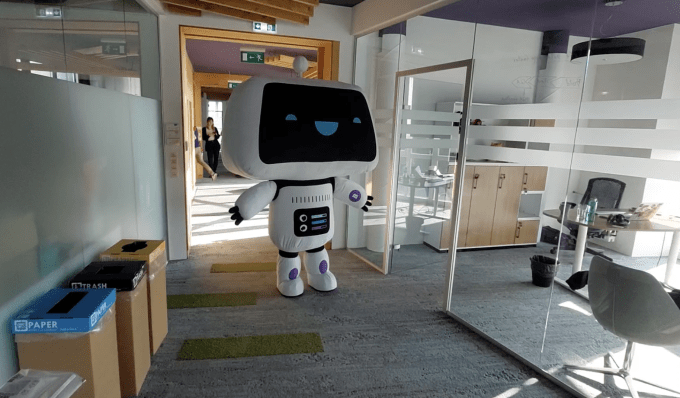
Using tactics that dispensed with traditional media and marketing, Birmacher’s company hired a manga artist to create a comic featuring a mobile developer, developed “Japan-first” swag to hand out and even crafted a full-sized mascot costume for conferences.

“We left the suit with one of our customers and now people wear it while they're drinking,” he writes in a TechCrunch+ post.

(TechCrunch+ is our membership program, which helps founders and startup teams get ahead. You can sign up here.)

Read More

How our SaaS startup broke into the Japanese market without a physical presence image

Image Credits: Bitrise

Big Tech Inc.

  • Tesla bug was bad: It's cool that cars today can get updates over the air, and do more stuff over time. What's not cool is when your neat computer-on-wheels has a bug. It turns out that a security aficionado was "able to remotely access dozens of Teslas around the world because security bugs found in an open-source logging tool popular with Tesla owners exposed their cars directly to the internet." Whoops!
  • Google in trouble at home, abroad: Google is under fire in its home market for putatively deceiving users into sharing data, while in Europe it is in trouble for its "plan to end support for tracking cookies in Chrome" thanks to a "complaint to the European Commission" put together by German publishers.
  • NBC hopes TikTok will make the upcoming Olympics cool: I don't know if TikTok has yet reached the "Hello, Fellow Kids" level of cheugy that all social networks reach at some point, but it's clear that megabrands hope that it has not. Hence TV groups hoping to piggy-back on the cool to make their own product a bit less, well, cheugy.
  • Apple fined: Once upon a time, Apple didn't allow third-party apps on the iPhone. Then it did and made a squintillion dollars. Now some countries are saying that Apple has to allow for third-party payment systems in third-party apps. And Apple is Not Stoked. Hence why it just got fined "€5 million (~$5.6 million) for failing to comply with conditions in an order requiring it to allow local dating apps to make use of third-party payment technology in their apps" by the Dutch.

TechCrunch Experts

Are you all caught up on last week's coverage of growth marketing and software development? If not, read it here.

TechCrunch wants you to recommend growth marketers who have expertise in SEO, social, content writing and more! If you're a growth marketer, pass this survey along to your clients; we'd like to hear about why they loved working with you.

TechCrunch Experts image

Image Credits: SEAN GLADWELL / Getty Images

Read more stories on TechCrunch.com

Newest Jobs from Crunchboard

See more jobs on CrunchBoard

Post your tech jobs and reach millions of TechCrunch readers for only $200 per month.

Facebook Twitter Youtube Instagram Flipboard

View this email online in your browser

Privacy Policy | Terms of Service | Unsubscribe

© 2022 Verizon Media. All rights reserved. 110 5th St, San Francisco, CA 94103